
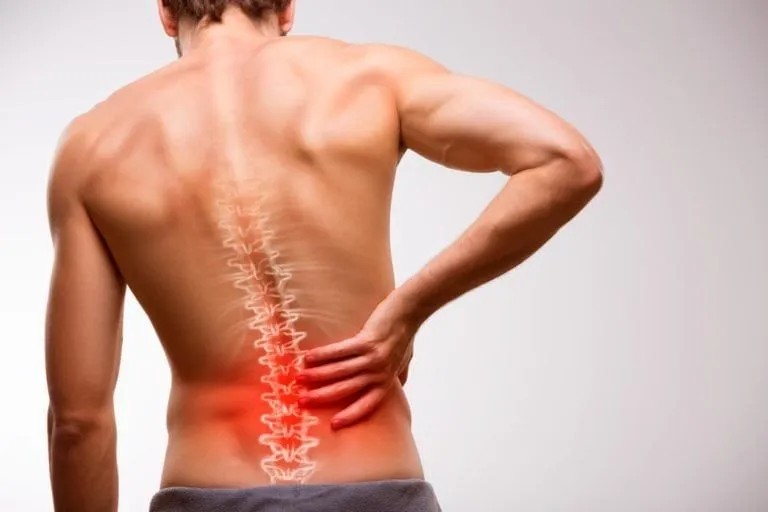


Low back pain (LBP) is one of the most common musculoskeletal complaints in athletes and non‑athletes alike. In athletes, chronic low back pain not only impairs performance but often becomes a persistent, frustrating “stiffness‑pain” cycle that resists simple explanations. Among the many anatomical and neuromuscular contributors, one structure that is increasingly gaining attention is the deep lumbar multifidus muscle.
In recent years, researchers using imaging techniques such as shear‑wave elastography have demonstrated that athletes with chronic low back pain often show increased stiffness of the deep multifidus — more so than the superficial portions. This altered stiffness appears to contribute to dysfunction, pain maintenance, and poor recovery if not properly addressed.
The multifidus is a series of small muscles located adjacent to the vertebral column, spanning multiple vertebral levels. In the lumbar spine region, it is a critical part of the paraspinal musculature.
The deep portion is thus often considered part of the spine’s “fine control” or “local stabilizer” system, complementing global muscles such as erector spinae, obliques, quadratus lumborum, etc.
Because the deep multifidus is intimately involved in controlling small intersegmental motion, its proper function is critical to maintain spinal integrity, reduce microtrauma, and manage load transfer across vertebral joints.
For athletes, the lumbar spine is under frequent demands: repeated trunk extension, rotation, load carrying, abrupt deceleration, twisting, and more. Even small aberrant intersegmental movements (or micro-instability) can gradually accumulate stress. The deep multifidus helps damp these perturbations:
Thus, when the deep multifidus becomes dysfunctional — e.g., with increased stiffness, delayed activation, atrophy, or fatty infiltration — the balance of spinal control is disrupted. Over time, this may predispose to pain, irritation of joints or discs, and maladaptive movement patterns.
Stiffness, in a biomechanical / physiological sense, refers to resistance to stretch or deformation under load. In muscles, stiffness is a composite of passive (resting) properties and active tension (tone, co-contraction).
When we talk about increased stiffness in the deep multifidus, especially in the context of low back pain, we usually refer to:
Imaging studies using shear wave elastography quantify stiffness in terms of Young’s modulus or kilopascals (kPa), indicating how much force is needed to deform the tissue.
Importantly, “increased stiffness” is not always beneficial. While a certain degree of stiffness aids stability, excessive stiffness impairs adaptability: the muscle cannot relax or lengthen efficiently, reducing its capacity to respond dynamically to changing loads or sudden perturbations.
Thus, when stiffness becomes pathological, it reduces functional capacity, flexibility, and effective control.
Understanding why stiffness occurs is essential to design effective rehabilitation. The development is multifactorial, involving biomechanical, neural, structural, and behavioral contributors. Below are key pathways:
When the lumbar spine is subjected to pain or irritation (e.g., disc, facet, soft-tissue), the nervous system often induces increased muscle tone in adjacent stabilizers, including multifidus, to “protect” the region. This guarding initially serves a protective role but, if sustained, leads to chronic overactivity.
Over time, this elevated resting tone causes micro‑damage, connective tissue changes, and reduced capacity to relax — culminating in stiffness.
Chronic low back pain is associated with altered neuromuscular control: timing of muscle activation changes, recruitment patterns shift, and inhibitory pathways get disrupted. This can cause the deep multifidus to stay in a semi‑contracted state even when not needed, rather than toggling between relaxed and active states.
Because the deep fibers are supposed to engage only in precise, low-level recruitment, their overuse or persistent activation is maladaptive.
Additionally, some studies indicate that motor control (e.g. isometric multifidus activation) can influence cortical changes (M1 motor area excitability) and thus perpetuate altered neurocontrol.
Athletes often expose the lumbar spine to repeated stresses — extension, rotation, load transfers, twisting, sudden deceleration, and asymmetric forces. Over time, microtrauma may occur in soft tissues (ligament, facet joints, paraspinal musculature).
As a response, localized fibrosis or micro‑scarring may develop, stiffening the muscle to “stabilize” the region. This is akin to how overused muscle groups elsewhere develop increased tone or tightness.
Pain often leads to certain movements being “avoided.” If the athlete suppresses trunk movement or spinal micro-motions, the multifidus may gradually lose its dynamic range and adaptability. The deep fibers might also undergo fatty infiltration or atrophy over longer periods (as seen in chronic LBP imaging studies).
Subsequently, the system may “lock in” a stiffer behavior as compensation: global muscles and ligaments may take over, which further reduces dynamic capacity of the deep multifidus.
Athletes often have strengths and movement patterns that bias certain muscle groups. For instance:
These can overload the lumbar region and chronically strain multifidus, pushing it to adopt a stiffer state to resist perturbations.
Once stiffness is entrenched, a cascade of adverse effects can follow — compounding pain, dysfunction, and risk of re-injury. Key consequences include:
Stiffness limits the ability of spinal segments to adjust and flex/extend or rotate subtly. In sports and daily tasks, the spine must adapt to small perturbations; stiff regions cannot respond fluidly, increasing risk of injury elsewhere.
If the active stabilizing system (multifidus + deep core synergy) fails to buffer forces, more load is transferred to passive structures—e.g.:
Over time, this contributes to degeneration, pain sensitization, and further dysfunction.
Stiffness itself can provoke nociceptive inputs (through increased tissue stress, microtrauma, ischemia). That pain perpetuates muscular guarding, which increases stiffness further—a vicious cycle.
Athletes may feel a sensation of “tightness” or “locking” even in absence of acute injury.
To avoid loading the stiff lumbar spine, the athlete may recruit compensatory motion from neighboring segments (thoracic, hip, pelvis). Over time, these compensations increase the risk of:
Stiffness limits maximal range, reaction capacity, and adaptability. Athletes may lose speed, agility, or tolerate less aerobic/trunk-endurance load. Training interruptions, suboptimal mechanics, and re-injury risk increase.
Addressing deep multifidus stiffness requires a multimodal, staged, and targeted physiotherapy approach . Here is a structured framework:
A thorough assessment is the foundation. Key components include:
a. History & symptom profiling
b. Palpation, manual testing & muscle tone evaluation
c. Motor control and activation testing
d. Imaging & elastography (if available)
e. Functional and sport‑specific testing
From this assessment, you should be able to localize the stiff segments, identify control deficits, and design a staged rehabilitation program.
Before attempting to “retrain” a stiff muscle, you often need to reduce pain, guarding, and excessive tone.
a. Manual therapy & soft tissue techniques
b. Modalities & adjunctive interventions
c. Patient education & posture/behavior strategies
The aim is to reduce hypertonus, allow tissues to soften, and reduce input from nociceptive systems so that retraining becomes effective.
Once pain and guarding have eased, the next objective is to re-establish selective control and activation of the deep multifidus — without overloading compensatory muscles.
a. drills (isolation first)
b. Feedback-enhanced training
c. Gradual progression to more challenging positions
d. Co-contraction and timing emphasis
This phase may last weeks to months, depending on severity, stiffness, and patient response.
While you want control, you don’t want an overly rigid spine. It is crucial to gradually restore **mobility** in stiff segments to allow the deep multifidus to regain flexibility and adaptability.
a. Segmental mobility drills
b. Global flexibility work
c. Dynamic mobility with control
Once the multifidus control is re-established and stiffness reduced, you can build resilience, endurance, and strength— always ensuring the deep system remains primary.
a. Endurance and repeated low-load work
b. Functional strengthening & loading
c. Load progression & periodic assessments
Even once symptoms resolve, ongoing maintenance is critical in athletes. The stiff pattern may recur under overload. Strategies include:
Periodic motor control refreshers (e.g. multifidus “tuning” sessions)
In essence, the deep multifidus should be an ongoing “guardrail” rather than a one-time rehab target.