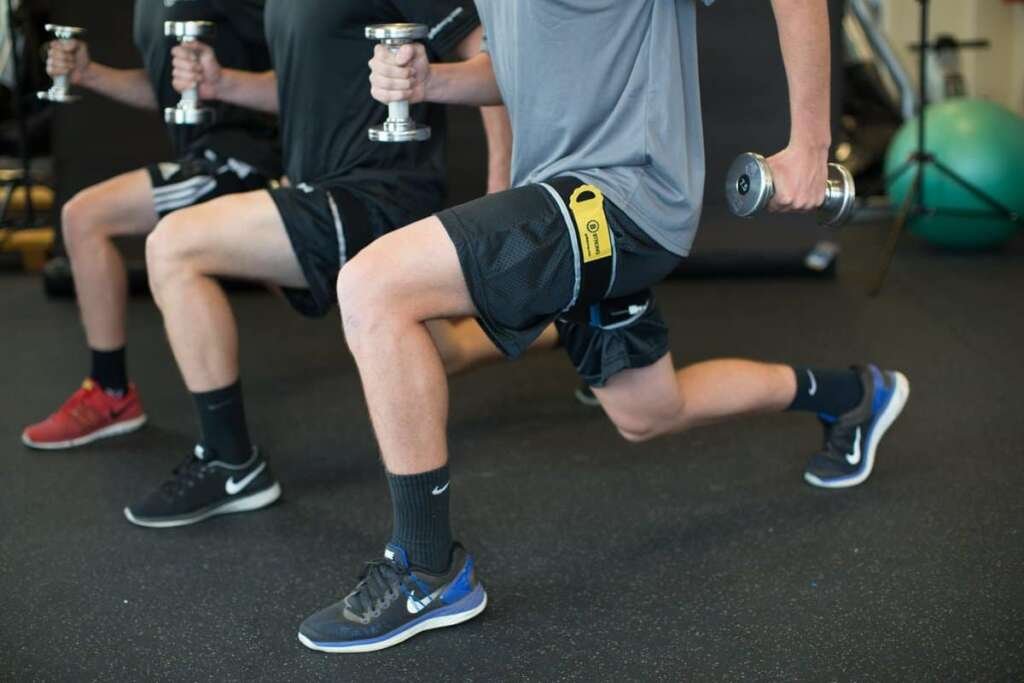
Benefits of BFR Training
Research highlights numerous benefits for both clinical and athletic populations:
1. Muscle Hypertrophy & Strength
- Low-load BFR induces muscle growth comparable to heavy-load training .
- In knee osteoarthritis, it improves muscle mass and function while reducing pain .
- Enhances post-ACL reconstruction recovery by counteracting quadriceps atrophy .
2. Rehabilitation Efficacy
- Helps patients maintain muscle while protecting healing tissues .
- Enables early intervention as soon as 2–3 weeks post-surgery.
3. Aerobic & Endurance Gains
- In moderate aerobic activities like running, BFR can boost VO₂max, time to exhaustion, and running economy, though evidence is more modest .
4. Targeted Muscle Fiber Adaptations
- Low-load BFR may favor type I fiber hypertrophy—complementing traditional heavy-load training .
5. Reduced Joint Stress
- With loads as low as 20–40 % 1RM, mechanical joint stress is minimized—vital in rehabilitative scenarios .
Conditions Treated by BFRT
BFRT is effective across a diverse range of conditions:
Post-Surgical Rehabilitation
- ACL reconstruction, knee/shoulder arthroscopy: combats atrophy, restores quadriceps/rotator cuff strength when heavy loading isn’t possible.
- Fracture recovery (e.g., ankle, wrist): supports muscle activation and circulation even with immobilization.
Muscle Weakness & Deconditioning
- Prolonged bed rest, chronic illness, or post-hospital deconditioning: preserves and rebuilds muscle mass and strength under safe, low-load conditions.
Tendinopathies & Joint Pain
- Achilles, patellar, rotator cuff tendinopathy: BFR supports tendon loading while reducing pain and mechanical stress
- Osteoarthritis and joint degeneration: enhances quadriceps strength and function without exacerbating joint pain.
Chronic Pain & Neuromuscular Conditions
- Low back or widespread chronic muscular pain, fibromyalgia: metabolic stress and endorphin release improve pain modulation and muscle endurance.
- Conditions like polymyositis, dermatomyositis: BFR safely increases muscle strength, cross-sectional area, and quality of life.
Vascular & Metabolic Health
- Early-stage peripheral vascular disease, diabetes: improves endothelial function, glucose uptake, and capillary density .
- Older adults at risk of muscle loss or metabolic decline: preventative muscle preservation and modest cardiovascular benefit .
Athletic Performance & Periodization
- Injury deload phases: maintains strength and hypertrophy despite reduced mechanical loading
- Older athletes or those managing chronic joint stress: continues performance gains with minimal joint impact.
Importance of BFRT
Blood Flow Restriction Training (BFRT) holds growing importance across rehabilitation, athletic performance, and ageing populations due to its ability to deliver powerful muscle and vascular adaptations with low mechanical stress.
1. Accelerates Muscle Strength & Hypertrophy
- BFRT enables low-load resistance training (20–40% 1RM) to achieve hypertrophy similar to heavy loading, making it indispensable for individuals unable to lift heavy loads due to injury, surgery, or joint issues.
- Meta-analyses confirm that BFRT improves muscle strength and cross-sectional area significantly more than low-load training alone—and in some cases matches or closely approaches high-load training outcomes, especially when personalized cuff pressures are used.
2. Enhances Rehabilitation and Recovery
- It’s highly effective post-surgery—such as after ACL reconstruction or knee arthroscopy—to combat muscle atrophy , restore strength, and support function when traditional loading is contraindicated .
- BFRT promotes faster recovery with minimal joint damage, making it ideal for athletes and physically active individuals returning from injury.
3. Promotes Vascular Health & Angiogenesis
- Emerging evidence shows BFRT enhances endothelial function (improved flow-mediated dilation) and increases VEGF levels, implying stronger blood vessel growth and healthier vascular responses—key for tissue repair and long-term cardiovascular health.
- It supports peripheral circulation improvements, beneficial not only after cardiac events or in stroke rehabilitation but also for older populations with compromised vascular health .
4. Improves Endurance & Functional Performance
- When applied to aerobic exercises like walking, BFRT enhances VO₂ max, running economy, and increases time to exhaustion, offering a low-stress alternative for endurance training.
- Useful for athletes during sport-specific cycles, BFRT helps maintain or improve performance without overloading musculoskeletal structures
5. Stimulates Potent Physiological Mechanisms
Key mechanisms activated by BFRT include:
- Metabolic stress : Hypoxia-induced buildup of lactate and metabolites drives anabolic signaling (HIF-1α, mTOR).
- Fast-twitch fiber recruitment : Even at low loads, BFRT activates Type II fibers typically only utilized under heavy resistance .
- Hormonal surge: Post-session increases in growth hormone, IGF-1, and testosterone-like responses support muscle repair and growth.
- Cellular swelling : Increases intracellular pressure, triggering muscle protein synthesis similar to high-load training.
- Angiogenesis: Elevated VEGF supports improved capillary density and nutrient flow .
6. Helps Manage Low-Load Joint & Bone Health
- BFRT strengthens bones, tendons, and ligaments through increased collagen synthesis and mechanical stimulus with less joint stress—crucial for conditions like osteoporosis and osteoarthritis.
- Supports bone density gains and metabolic health in sedentary or elderly groups with low-impact protocols.
7. Broad Applicability & Accessibility
- Effective in neurological disorders: trials show functional gains in gait, balance, and muscle thickness even in populations with neurological challenges.
- Adaptable across age ranges and fitness levels, from surgical rehab to elite athlete prep .
- Time-efficient and easy to implement using simple cuff systems, saving therapy time and resource use.
Why BFR Training Matters
- Bridges gap between rehabilitation and performance—powerful stimulus with minimal mechanical load.
- Facilitates early mobilization and muscle maintenance post-injury or surgery.
- Supports vascular health through improved endothelial function and capillary density.
- Enables functional gains in strength, endurance, and bone/joint integrity—even in populations with physical limitations.
- Cost-efficient, scalable, and highly personalized, fitting diverse clinical and athletic settings.
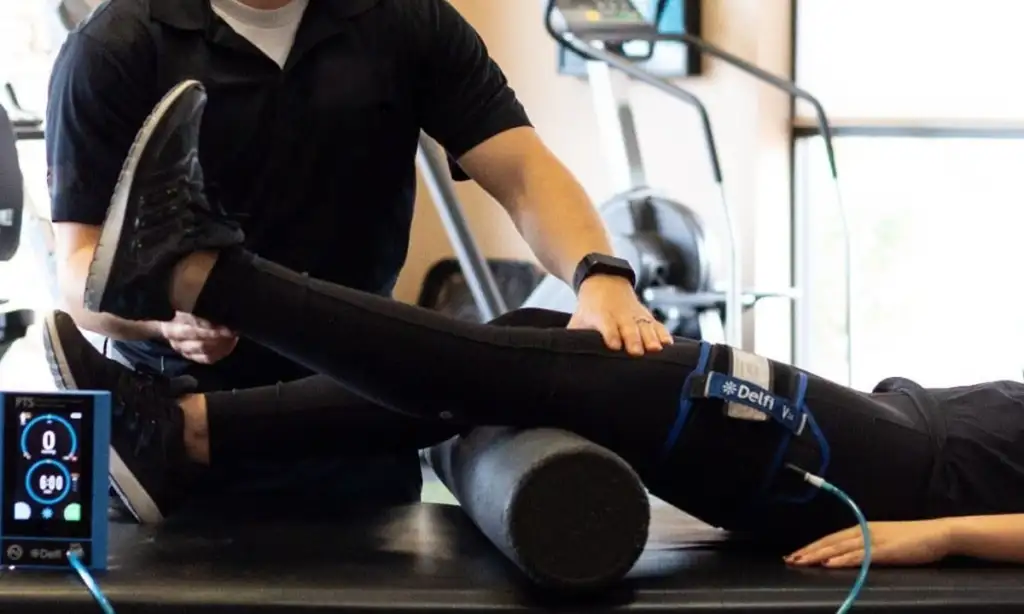
BFR Protocols & Implementation
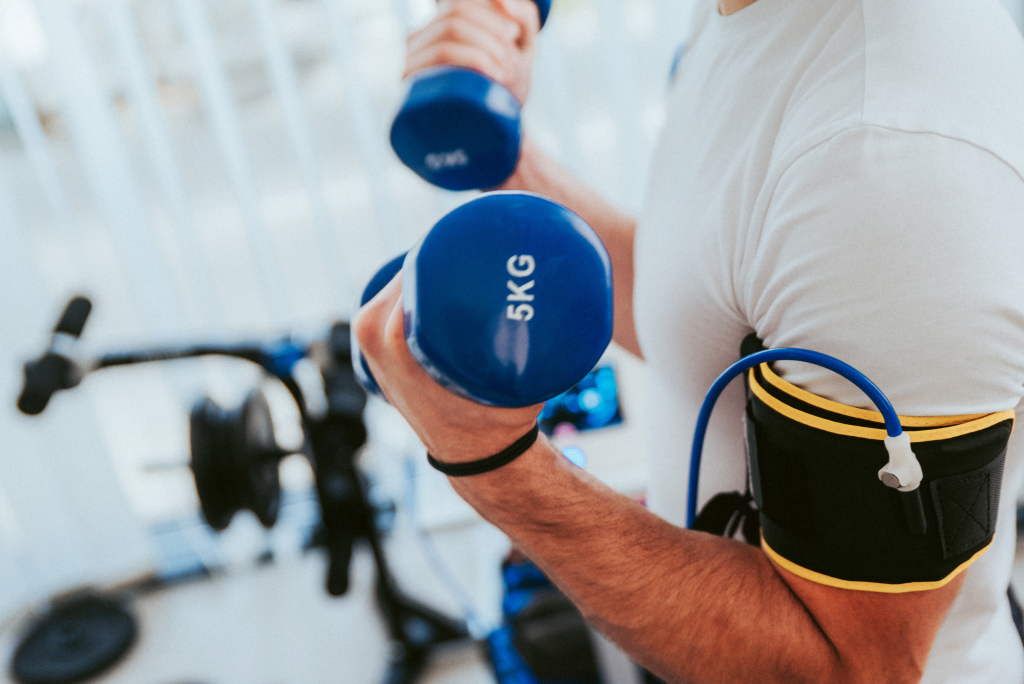
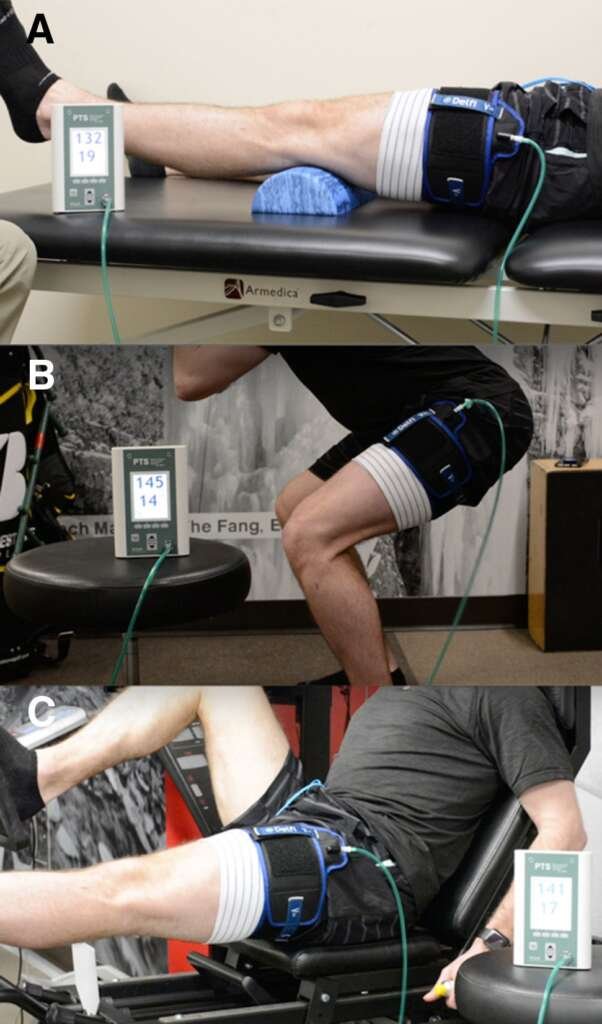
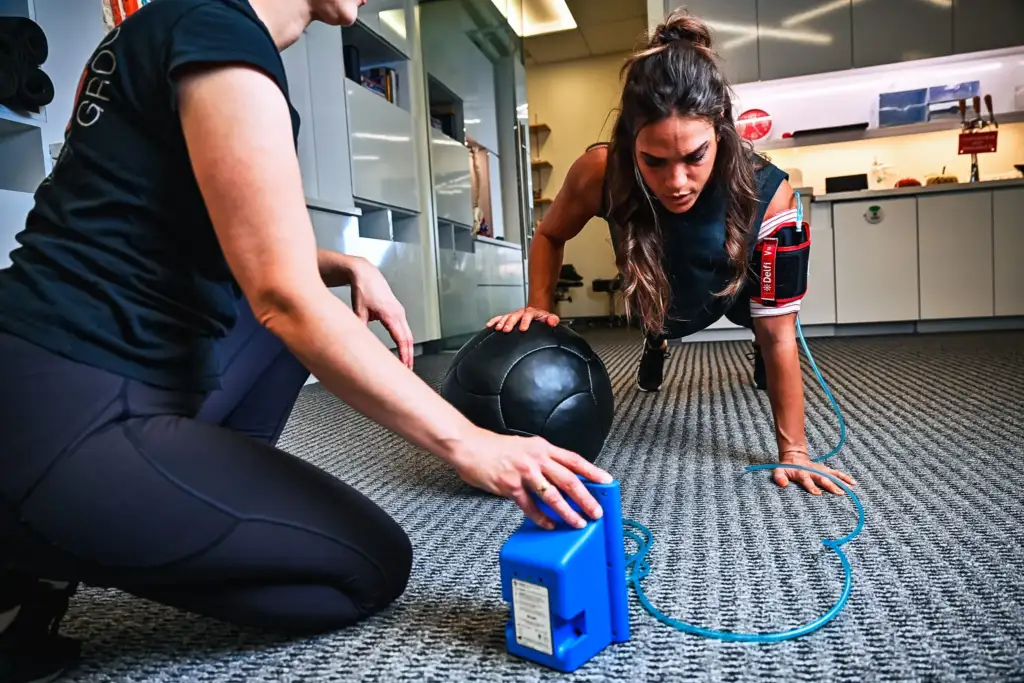
Cuff Selection & Placement
- Use medical-grade pneumatic cuffs.
- Widths vary: ~10 cm for arms, 17–18 cm for legs
- Place just below the groin or armpit on upper limbs .
Determine Occlusion Pressure
- Measure Limb Occlusion Pressure (LOP) individually using Doppler or automated units
- Apply 40–50 % LOP for arms, 60–80 % for legs
Exercise Load & Volume
- Perform 20–40 % of 1RM; often 30 % is used with 75 total reps in 4 sets (30–15–15–15)
- Rest 30–60 seconds between sets; limit sessions to ~15–20 minutes
Frequency & Progression
- Ideally 2–3 sessions/week; athletes can perform up to daily for short periods .
Safety Monitoring
- Watch for numbness, swelling, intense pain, dizziness.
- Adjust pressure or cease if adverse signs appear
Risks & Side Effects
Common Minor Effects
- DOMS (24–72 h)
- Bruising, mild discomfort
- Transient numbness Responds to adaptation over time.
Cardiovascular Response
- Temporary rise in HR and BP (to ~110 bpm, ~180/100 mmHg) comparably safe to moderate training .
Muscle Damage & Rhabdomyolysis
- Rare instances (<0.2 %), tied to eccentric/failure protocols—training without reaching failure minimizes this risk .
Thrombus Risk
- No significant rise in clotting markers; incidence not higher than standard exercise
Nerve & Tissue Injury
- Proper cuff placement avoids nerve compression or skin trauma
Contraindications & Precautions
Absolute Contraindications
- Active/recent VTE (DVT, pulmonary embolism)
- Severe uncontrolled hypertension (>180/110 mmHg)
- Peripheral vascular or arterial disease
- Open wounds/infections/tumors in limb
- Hematologic disorders (sickle cell, hemophilia, clotting disorders)
- Pregnancy
- Recent surgery (<2‑12 weeks) depending on condition; consult physician
Relative Contraindications / Precautions
- Diabetes with vascular issues
- Lymphedema or post-mastectomy limb
- Varicose veins
- Obesity, advanced age, inactivity, renal compromise, cancer
- Cardiovascular conditions (heart failure, arrhythmia) .
A thorough medical screening, including health history and physical exam, should always precede BFRt initiation.
Integrating BFRT Into Practice
Who Benefits Most?
- Post-surgical patients (orthopedic/ACL rehab)
- Individuals with joint pain or osteoarthritis
- Athletes needing muscle maintenance with low loading
- Older adults with reduced mobility
Protocol Flow
- Pre-screen using medical history, BP, and vascular check
- Measure LOP per limb each session
- Apply cuff and set 40–80 % LOP
- Perform low-load exercise (20–40 % 1RM), 4 sets to failure or 30–15–15–15 reps
- Rest 30–60 seconds, limit total occlusion time to ~15–20 minutes
- Monitor HR, BP, comfort during and after
- Track outcomes, adjust load and frequency gradually
Training Oversight
Essential to have supervision by trained professionals in device use, pressure adjustment, and patient response monitoring.
Here’s how DMPhysios helps patients with Blood Flow Restriction Training (BFRt), along with the conditions it treats:
How DMPhysios Uses BFRT to Support Patient Health
1. Personalized Assessment & Screening
At the outset, DMPhysios performs thorough screenings:
- Comprehensive health history and vascular checks
- Measurement of Limb Occlusion Pressure (LOP) using Doppler or pulse oximetry
This ensures safety and customizes the training parameters for each patient.
2. Individualized Protocol Design
DMPhysios tailors protocols based on goals and conditions:
- Rehab-focused : 20–30% 1RM resistance or low-intensity movement under BFR to prevent muscle wasting post-surgery or during immobilization.
- Pain management : Low-load BFR sessions that reduce discomfort while supporting muscle activation around painful joints (e.g., achilles tendinopathy)
- Performance maintenance : For athletes, strategic BFR sessions maintain strength and hypertrophy during deload or injury phases.
3. Safe Supervision & Progression
A therapist from DMPhysios closely monitors:
- Cuff pressure consistency (40–80% LOP)
- Exercise volumes (45–75 reps in 2–5 sets, depending on goals)
- Vital signs and patient comfort during sessions
4. Integration into Holistic Rehabilitation
BFRt at DMPhysios is woven into a comprehensive rehab plan:
- Combined with soft tissue therapy, neuromuscular re-education, and targeted functional exercises
- Intentional exercise design supports movement patterns and functional performance, accelerating recovery timelines.
5. Monitoring & Adjustments
Function and strength are measured using tools like:
- Timed-up-and-go, single-leg squat, joint range tests
- Subjective scales: VAS for pain, SF-36 for quality of life
- Protocols are adjusted every 2–4 weeks as patients progress.
6. Education & Empowerment
DMPhysios provides:
- Clear explanations of BFR mechanisms: muscle swelling, metabolic stress, and growth hormone response.
- Post-session guidance on activity pacing and signs to monitor (e.g., excessive soreness or numbness).
Benefits of Spine Pain Treatment
(For In-Clinic Appointments)