


C
hronic pelvic pain is one of the most frustrating and misunderstood conditions affecting both women and men. It is persistent, emotionally draining, and often resistant to conventional treatment approaches. Many individuals spend months—or even years—undergoing investigations, consulting multiple specialists, and trying different medications, yet the pain continues.
When blood tests are normal and imaging reports say “no significant findings,” patients are often left confused and helpless. Some are told it is stress-related. Others are advised to simply “manage it.” But persistent pelvic pain is never imaginary. It always has a cause.
In many cases, the missing piece of the puzzle lies not in the organs—but in the muscles, joints, fascia, and nerves surrounding the pelvis. Understanding the musculoskeletal contribution to pelvic pain can completely change how we approach treatment and recovery.
Chronic pelvic pain (CPP) is defined as pain located in the lower abdomen or pelvic region that persists for more than six months. It may be constant or intermittent, mild or severe, sharp or dull. The discomfort can affect daily activities, sleep, work performance, and emotional well-being.
In women, pelvic pain may worsen during menstruation, ovulation, or intercourse. In men, it may present as deep aching in the perineal region, discomfort during sitting, or symptoms similar to prostatitis.
However, a significant number of individuals with pelvic pain do not have clear pathology on imaging or laboratory tests. When no obvious cause is found, frustration increases—for both patient and practitioner.
This is where the musculoskeletal system must be considered.
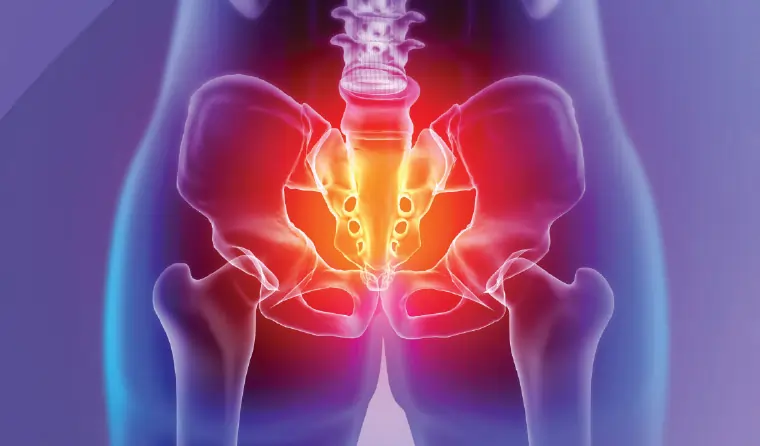
The pelvis is not merely a container for organs. It is a structural and functional hub connecting the spine, hips, and lower limbs. It houses a complex network of muscles, ligaments, fascia, and nerves that work together to support movement, posture, breathing, bladder and bowel control, and sexual function.
When any part of this system becomes dysfunctional, pain can arise—even if internal organs are healthy.
The pelvic floor is a group of muscles forming a supportive base at the bottom of the pelvis. These muscles help control urination, bowel movements, and support pelvic organs.
While weakness is commonly discussed, chronic pelvic pain is more often linked to excess tension or overactivity of the pelvic floor muscles.
When these muscles remain in a guarded or contracted state for long periods, they may develop:
Symptoms may include:
Tight muscles do not always appear abnormal on scans, making this condition easy to miss.
The sacroiliac (SI) joints connect the spine to the pelvis. Even subtle stiffness or instability in these joints can produce pain that radiates to the groin, lower abdomen, buttocks, or inner thigh.
Because this pain mimics gynecological or urological conditions, it is frequently misinterpreted.
The pelvis contains deep muscles such as the obturator internus, piriformis, adductors, and lower abdominal muscles. When these develop tight bands or trigger points, they can create persistent, poorly localized pelvic pain.
Fascial restrictions from previous surgeries, childbirth, injuries, or inflammation can also limit mobility and contribute to chronic discomfort.
Prolonged sitting, poor posture, stress, abdominal surgeries, pregnancy, or previous lower back injuries can alter pelvic mechanics.
Over time, the body compensates by tightening certain muscles and overloading others. This protective strategy initially prevents injury—but when sustained, it creates chronic pain.
The key point is this: muscle dysfunction does not show up on most imaging tests, yet it can be the primary driver of pelvic pain.
When pelvic pain persists, patients typically undergo:
These interventions are essential to rule out serious pathology. However, they often fail to provide long-term relief when the root cause is mechanical or muscular.
Scans are excellent at identifying structural abnormalities such as cysts, tumors, or inflammation. But they cannot assess:
A muscle in chronic spasm may appear completely normal on MRI.
Painkillers and anti-inflammatory drugs reduce discomfort temporarily. Hormonal therapy may help specific gynecological conditions. Antibiotics treat infection.
However, none of these treatments:
As a result, symptoms often return when medication is discontinued.
Chronic pelvic pain frequently becomes a self-sustaining loop:
Pain → Muscle guarding → Reduced circulation → Increased sensitivity → More pain
Unless muscle tension is directly addressed, this cycle continues indefinitely.
Long-standing pain can make the nervous system hypersensitive. The brain begins to interpret normal sensations as threatening. This phenomenon, known as central sensitization, amplifies pain perception.
Physiotherapy plays an important role in calming this response through graded movement, education, and neuromuscular retraining.
At DMPhysios, chronic pelvic pain is approached from a comprehensive musculoskeletal perspective. Rather than focusing solely on symptoms, the goal is to identify the mechanical and functional contributors.
A detailed evaluation may include:
This thorough assessment helps identify the true source of dysfunction.
If muscle overactivity is present, treatment focuses on:
Strengthening is introduced only after normal muscle tone is restored.
Restricted sacroiliac or lumbar joints are treated with manual therapy techniques to restore normal movement. Improved joint mobility reduces abnormal stress on surrounding muscles.
Targeted exercises improve coordination between:
Balanced muscle function reduces mechanical strain and prevents recurrence.
Education about pain, graded exposure to movement, and breathing techniques help calm central sensitization.
The aim is not just pain reduction—but restoration of normal function.
You may benefit from physiotherapy if:
Individuals diagnosed with conditions such as Endometriosis or Chronic prostatitis may still have a musculoskeletal component contributing to their symptoms.
Physiotherapy can complement medical management and improve overall outcomes.
Chronic pelvic pain is often viewed as a mysterious internal issue. But what if we understood it differently?
The body is designed to protect itself. When stress, injury, inflammation, or emotional strain occurs, muscles tighten to guard vulnerable areas.
This guarding is helpful initially. But if the tension remains long after the original trigger has resolved, it becomes problematic.
The pelvis plays a central role in:
Any disruption in coordination between these systems can create ongoing discomfort.
Instead of asking, “What is wrong with my organs?” a more useful question may be:
“Is my body stuck in protection mode?”
When this perspective shifts, treatment shifts as well—from suppressing symptoms to restoring balance.
Persistent pain affects more than physical health. It can lead to:
Addressing pelvic pain through physiotherapy often improves confidence and emotional well-being, as patients regain control over their bodies.
With consistent care, individuals often report:
Most importantly, they regain trust in their body.
Chronic pelvic pain is complex—but it is not untreatable.
When medications and scans fail to provide answers, it does not mean the pain is imaginary. It may simply mean that the musculoskeletal system has been overlooked.
The pelvis is a dynamic structure requiring coordination between muscles, joints, fascia, and nerves. When this system is imbalanced, persistent pain can develop—even in the absence of visible pathology.
Physiotherapy offers a structured, evidence-based approach to identify and correct these dysfunctions. By restoring movement, normalizing muscle tone, and calming the nervous system, recovery becomes possible.
Understanding pelvic pain from a musculoskeletal perspective provides hope—and a practical path forward for those who have struggled silently for far too long.