
Knee pain is one of the most common complaints seen in both physically active individuals and those who spend long hours in a sedentary routine. It does not just affect athletes or fitness enthusiasts but also office workers, students, and even homemakers. The knee joint plays a vital role in almost every movement we perform throughout the day, including walking, standing, climbing stairs, sitting, and even maintaining balance. Because of this constant use, even a small dysfunction can lead to noticeable discomfort and limitation in daily activities.
Among the various types of knee discomfort, pain felt specifically on the inner side of the knee often points toward an issue with a small but extremely important muscle known as the Vastus Medialis Oblique, commonly referred to as the VMO. This muscle is often overlooked, yet it plays a critical role in maintaining proper alignment and stability of the knee joint. When the VMO does not function efficiently, it can disrupt the natural movement of the kneecap, leading to irritation, strain, and eventually VMO pain.
What makes VMO pain particularly important to understand is that it is rarely an isolated problem. Instead, it is usually a sign of underlying issues such as muscle imbalance, poor movement patterns, weakness in surrounding muscles, or improper loading of the knee joint. Many people tend to ignore early signs of discomfort, assuming it is temporary, but over time, this can progress into more persistent pain and functional limitations. This is why early awareness and timely intervention are crucial.
Understanding VMO pain is essential because it directly affects knee stability, movement quality, and long term joint health. A well functioning VMO ensures that the kneecap tracks smoothly during movement, reducing unnecessary stress on the joint surfaces. On the other hand, a weak or delayed VMO can cause improper tracking, leading to increased wear and tear, discomfort during activities, and even a higher risk of injury. This can impact not only your physical performance but also your confidence in movement.
In this detailed guide, we will take a deeper look into what the VMO is and why it plays such a significant role in knee health. We will explore the common reasons why VMO pain develops, how it can affect your daily life, and the signs you should not ignore. Most importantly, we will discuss effective ways to manage and recover from VMO pain through a structured physiotherapy approach that focuses on long term results rather than temporary relief.
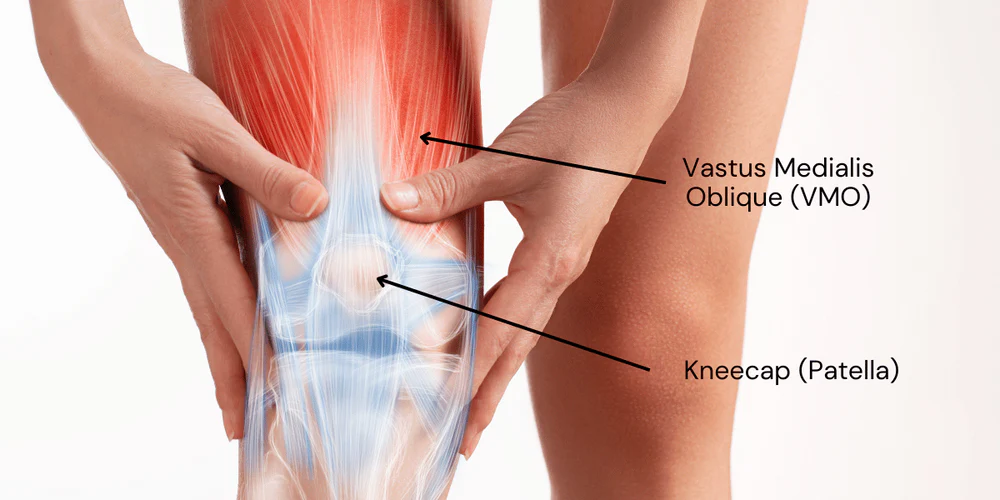
The VMO, or Vastus Medialis Oblique, is an essential component of the quadriceps muscle group located on the front of the thigh. More specifically, it lies on the inner portion of the thigh, just above the knee joint, and is easily recognized by its teardrop shaped appearance. Although it may seem like a small muscle compared to the rest of the quadriceps, its role in maintaining knee health is extremely significant.
The primary function of the VMO is to stabilize the patella, also known as the kneecap, especially during the final degrees of knee extension. It works in close coordination with the other quadriceps muscles to ensure that the kneecap moves in a controlled and aligned manner within the femoral groove. This smooth tracking is essential for pain free and efficient movement of the knee joint.
When functioning properly, the VMO acts as a guiding force that keeps the kneecap from drifting outward. During everyday activities such as walking, running, squatting, and climbing stairs, the knee undergoes repeated bending and straightening. In all these movements, the VMO plays a key role in maintaining alignment and reducing unnecessary stress on the joint surfaces.
However, if the VMO becomes weak, delayed in activation, or poorly coordinated, this balance is disrupted. The kneecap may start to track slightly off its normal path, often shifting more towards the outer side of the knee. This altered movement pattern increases friction and pressure within the joint, leading to irritation of surrounding structures. Over time, this can result in the development of VMO pain and a feeling of discomfort or instability in the knee.
It is important to understand that VMO pain does not usually occur due to a single event but rather develops gradually as a result of repetitive stress, muscle imbalance, or poor movement habits. Because the VMO is so closely involved in knee stability, even a small deficiency in its function can have a noticeable impact on overall knee mechanics.
Therefore, maintaining proper strength, timing, and coordination of the VMO is crucial not only for preventing VMO pain but also for ensuring long term knee health and optimal movement performance.
VMO pain is most commonly experienced as a dull, aching, or sometimes sharp discomfort on the inner side of the knee, just around or slightly above the kneecap. It is frequently associated with weakness, delayed activation, or poor neuromuscular control of the VMO muscle. However, it is important to understand that this condition is rarely limited to just one muscle. In most cases, it reflects a broader movement dysfunction involving the hip, thigh, and lower leg, where multiple muscles and joints fail to work in proper coordination.
The knee does not function in isolation. It is part of a kinetic chain that includes the hip above and the ankle below. When there is weakness in the hip muscles, tightness in the surrounding tissues, or improper foot mechanics, the load on the knee increases. This altered load distribution can reduce the efficiency of the VMO, eventually contributing to the development of VMO pain. As a result, simply focusing on the site of pain without addressing the entire movement system may not lead to long lasting relief.
In its early stages, VMO pain often begins as a mild discomfort that may only be noticeable during specific activities such as climbing stairs, squatting, or getting up from a seated position. Many individuals tend to ignore these early signs, assuming the discomfort will resolve on its own. However, without proper intervention, the condition can gradually worsen. The pain may become more frequent, more intense, and may start affecting even simple daily activities like walking or standing for extended periods.
Over time, untreated VMO pain can lead to compensatory movement patterns, where the body tries to avoid discomfort by shifting load to other structures. This can further increase stress on the knee joint and surrounding muscles, creating a cycle of pain and dysfunction. It may also reduce your confidence in movement, limiting your participation in physical exercise, sports, or even routine tasks.
Understanding these early warning signs and addressing VMO pain promptly is crucial. With the right physiotherapy approach, focusing on muscle activation, strength, and overall movement correction, it is possible to not only relieve pain but also restore proper knee function and prevent future recurrence.
There are several reasons why VMO pain develops. Identifying the root cause is essential for effective management.
The quadriceps muscle group consists of four muscles. If the outer muscles become stronger than the inner VMO, it can pull the kneecap laterally, leading to irritation and pain.
Incorrect movement patterns during activities such as squatting, running, or even walking can overload the knee joint and contribute to VMO dysfunction.
Long hours of sitting weaken the quadriceps and reduce activation of the VMO, making it more prone to injury and pain.
Past knee injuries such as ligament sprains or patellar dislocations can disrupt normal muscle function and lead to persistent VMO pain.
Athletes and fitness enthusiasts who perform repetitive knee movements without proper recovery may develop irritation in the VMO region.
Recognizing the symptoms early can help prevent worsening of VMO pain.
If these symptoms persist, seeking professional guidance from experts such as DMPhysios can make a significant difference in recovery.
Ignoring VMO pain can lead to long term complications. The knee is a weight bearing joint, and any dysfunction affects almost every movement you perform.
Simple activities like walking, standing for long periods, or sitting cross legged can become uncomfortable. Over time, it may also lead to conditions like patellofemoral pain syndrome or early joint degeneration.
At DMPhysios, clinicians often observe that patients delay treatment until the pain interferes with daily life, which makes rehabilitation more challenging. Early intervention is always the best approach.
A proper diagnosis is essential for effective treatment. Physiotherapists assess multiple factors to identify the cause of VMO pain.
This includes checking muscle strength, flexibility, and joint alignment.
Observing how you walk, squat, or perform functional activities helps identify faulty movement patterns.
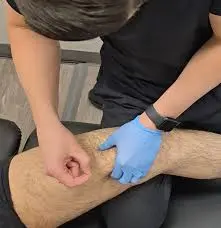
The therapist may check for tenderness around the inner knee and VMO region.
Specific tests are performed to evaluate knee stability and muscle activation.
At DMPhysios, a detailed and personalized assessment ensures that the root cause of the problem is addressed rather than just the symptoms.
Managing VMO pain requires a combination of strengthening, mobility work, and correction of movement patterns. A structured physiotherapy program can help restore normal function and prevent recurrence.
Initially, the focus is on reducing pain and inflammation.
Once pain reduces, the next step is to activate the VMO muscle.
Gradual strengthening is essential to correct muscle imbalance.
This phase focuses on restoring normal movement patterns.
At DMPhysios, rehabilitation programs are tailored to each individual, ensuring optimal recovery and long term results.
Exercises play a key role in managing VMO pain. Consistency and correct technique are crucial.
Tighten your thigh muscles while keeping the leg straight and hold for a few seconds.
Lift your leg while keeping it straight to engage the quadriceps.
Use a resistance band to strengthen the VMO specifically.
Hold a squat position against a wall to build endurance.
Step onto a platform and control the movement while coming down.
These exercises should be performed under proper guidance to avoid further strain.
Physiotherapy is the most effective way to treat VMO pain because it addresses the root cause rather than just providing temporary relief.
At DMPhysios, treatment focuses on:
The approach is holistic, combining manual therapy, exercise therapy, and patient education.
Recovery from VMO pain is not just about exercises. Certain lifestyle modifications can support healing and prevent future issues.
Incorporating these habits can significantly improve knee health.
If your VMO pain persists for more than a few days or worsens with activity, it is important to consult a physiotherapist.
Early treatment can prevent complications and speed up recovery. DMPhysios provides expert care with a patient centered approach, ensuring that each individual receives the right treatment plan.
Preventing VMO pain is always better than treating it later. Here are some practical tips:
Consistency is key when it comes to prevention.
VMO pain may seem like a minor issue initially, but if ignored, it can lead to significant discomfort and long term knee problems. Understanding the importance of the VMO muscle and addressing any dysfunction early can help you stay active and pain free.
With the right physiotherapy approach, targeted exercises, and lifestyle changes, recovery is not only possible but sustainable. Clinics like DMPhysios specialize in providing evidence based care that focuses on long term results rather than temporary fixes.
Taking care of your knees today will ensure better mobility and quality of life in the future. If you are experiencing inner knee discomfort, do not ignore it. Address your VMO pain early and take the first step toward a stronger, healthier you.