
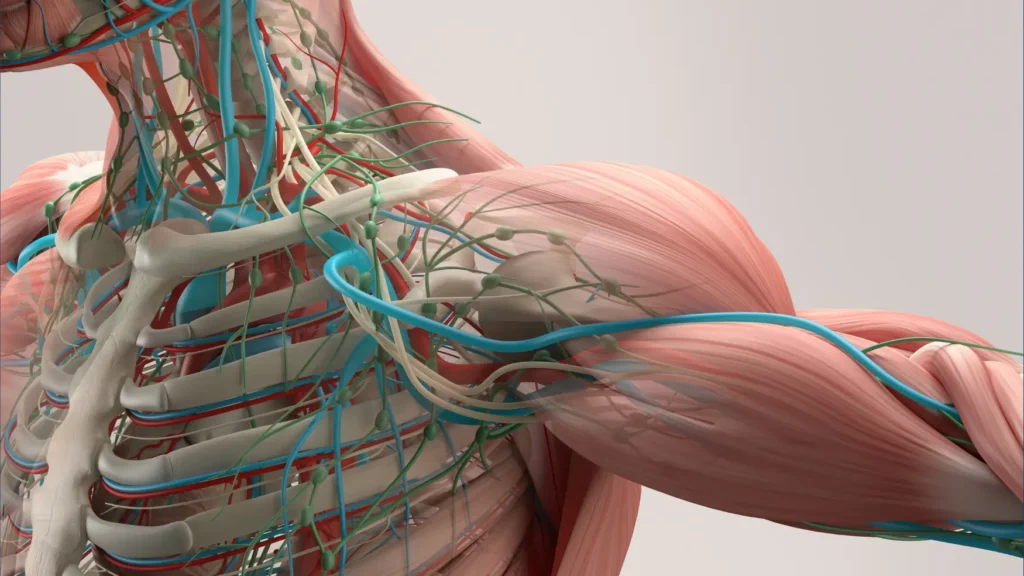


P ain is one of the most misunderstood experiences in human biology. We grow up believing that pain always means damage, a cut means pain, a twisted ankle means pain, a fractured bone means pain. This makes sense… until you meet the patient who wakes up with severe shoulder pain but no injury, or the runner whose knee hurts despite a perfectly normal MRI, or the office worker who develops chronic neck pain without any movement or trauma.
This is where the fascinating concept of central sensitization comes in, a phenomenon where the nervous system becomes hypersensitive, amplifying pain signals even when tissues are healthy.
This blog will explore exactly why this happens, how it develops, and what people (and clinicians) can do about it. Written for both patients and professionals, it combines science, real clinical insight, and practical solutions, exactly the kind of patient education resource used and recommended by leading clinics like DMPhysios.
For many decades, pain was believed to be a direct signal from injured tissues:
This “damage-equals-pain” model is appealing because it is simple. But it is also incomplete.
There are countless examples where pain does not match tissue damage:
These contradictions forced scientists to rethink pain.
Modern neuroscience shows that:
Pain is not something you feel in your tissues. Pain is something your brain produces to protect you.
This means pain is not a direct measure of damage, it is a measure of perceived threat.
The brain constantly receives information from:
Then it calculates danger.
If your brain believes you need protection, it increases pain.
If it believes you’re safe, it may decrease or eliminate pain, even with injury.
This is why a calm athlete may feel no pain with a broken bone, while a stressed office worker may feel severe pain without any structural abnormality.
Central sensitization occurs when the brain and spinal cord become overly responsive, causing:
Think of it as turning up the “volume knob” on pain.
In a sensitized nervous system:
Importantly:
The issue is not in the tissues. The issue is in how the brain processes information.
This does not mean the pain is “imagined.”
The pain is completely real, the brain has simply become too protective.
Clinics like DMPhysios often see patients who have normal scans and healthy joints but still experience severe pain due to this heightened sensitivity.
Central sensitization rarely appears out of nowhere. It usually builds gradually due to a combination of factors:
Ongoing pain “trains” the nervous system to become more reactive.
These emotional states activate the same brain regions involved in pain perception.
Lack of sleep increases inflammatory chemicals in the brain and decreases pain tolerance.
Avoidance reinforces fear → fear increases brain threat → brain outputs more pain.
Thoughts like
“Something is seriously wrong,”
“My back is damaged forever,”
“I’m going to make it worse,”
all amplify the brain’s danger response.
The brain “remembers” pain and becomes hyper-alert.
Even low-grade inflammation can sensitize spinal cord neurons.
Cold weather, loud environments, poor ergonomics, all can amplify pain signals.
Over time, this combination rewires the nervous system, making it more protective than necessary.
Not all pain is due to sensitization, but several signs make it likely:
Many specialists, including physiotherapists at DMPhysios, use these features to distinguish structural pain from sensitization-driven pain. This helps guide proper rehabilitation.
To understand central sensitization deeply, we must look at what happens inside the spinal cord and brain.
The spinal cord amplifies incoming messages, like turning up the gain on a microphone.
Normally, the brain calms excessive signals.
In sensitization, these controls weaken, letting more pain signals through.
Substances like:
all increase, making the system hypersensitive.
Imaging studies show changes in:
Pain becomes deeply linked to emotions, memories, and context.
Just like muscles grow with repetition, neural pathways strengthen when repeatedly used.
The more you experience pain, the more efficient your brain becomes at producing it.
This is why pain with central sensitization can feel severe, constant, and confusing, even when tissues are strong and healthy.
Many patients initially resist the idea that sensitization is the cause of their pain.
“Are you saying it’s in my head?”
“Are you saying my pain isn’t real?”
Not at all.
In sensitization, the brain’s protective alarm system misfires, but the alarm is real, loud, and painful.
The brain is not making up pain; it is misinterpreting input.
Consider two examples:
Even gentle touch hurts, not because the touch is harmful, but because the nervous system is sensitized.
People feel pain in a limb that no longer exists.
No tissue = still pain.
This proves pain can exist independently of tissue damage.
Thus, pain intensity does not always mean injury severity.
The nervous system itself can become the source of pain.
It’s common for patients to feel frustrated after an MRI or X-ray shows no injury:
Imaging shows structure, not function.
You can have:
This mismatch is typical in central sensitization.
That is why clinics like DMPhysios focus not only on structural evaluation but also on nervous system behavior and pain science education.
While sensitization can occur with any chronic pain condition, it is especially common in:
Patients often bounce between specialists without a clear explanation. Once sensitization is identified, treatment becomes much more effective.
Effective treatment involves a multi-layered approach:
When patients learn that pain does not always mean injury, fear decreases, movement becomes easier, and sensitivity reduces.
Education alone can create measurable changes in pain and movement.
Avoiding movement increases sensitivity.
Gentle, progressive movement reduces threat and restores normal brain-body communication.
Key strategies:
Clinicians often say,
“Motion is lotion for the nervous system.”
Regular aerobic movement:
Even 10–15 minutes daily is beneficial.
Since stress amplifies pain, techniques like:
help desensitize the nervous system.
Poor sleep increases inflammatory cytokines and reduces pain tolerance.
Key habits:
If someone avoids bending, turning, or lifting:
Avoidance → more fear → more sensitivity → more pain.
Reintroducing movements slowly rebuilds confidence and desensitizes tissues.
Hands-on techniques like:
help reduce muscle guarding and allow safe movement.
They do not “fix” the pain generator but reduce the threat level and help the nervous system relax.
Clinics like DMPhysios use these techniques strategically to complement movement-based rehabilitation.
Identifying unhelpful thoughts such as:
and replacing them with realistic, empowering beliefs reduces fear and dampens sensitization.
For long-term sensitization, emotional support plays a major role.
Therapies like CBT, ACT, and mindfulness-based stress reduction have strong evidence.
Physiotherapists are uniquely positioned to help because they:
A clinic like DMPhysios typically uses:
to help patients overcome pain driven by sensitization.
Imagine a house with a smoke alarm.
A normal alarm rings only when there is real smoke.
But a hypersensitive alarm rings when:
There’s no fire, but the alarm is loud and distressing.
Central sensitization is the same.
Your nervous system alarm becomes too sensitive.
It fires off warnings (pain) even when there is no real danger.
The goal of treatment is not to turn the alarm off, pain is still useful.
The goal is to reset the alarm so it only rings when necessary.
Yes.
The nervous system can heal, calm down, and return to normal functioning.
With the right strategies, patients often report:
But patience matters.
Desensitization is like training a muscle or learning a new skill.
Consistency → rewiring → recovery.
Pain does not always equal injury.
Sometimes pain reflects a highly protective, highly sensitive nervous system that is doing its best to defend you.
The solution is not rest, pills, or fear.
The solution is:
Clinics like DMPhysios guide patients through this process every day, helping people reclaim their lives even when pain seems confusing, persistent, or overwhelming.
Pain is real.
Your experience is valid.
And most importantly, your nervous system can change.
You can recover, rebuild, and return to a pain-free, confident life.